Running online ads is about getting the most bang for your buck. If you aren’t getting a return on your ad campaign, running ads becomes wasted ad spend.
Obviously, more sales will help increase your return. But lowering the cost of running an ad campaign/PPC Campaign through better budget management and bid management can improve results just as much.
That’s where PPC (pay-per-click) automation comes in. It helps advertisers automate routine tasks, reduce human error, and run campaigns efficiently across multiple advertising platforms using performance data and machine learning algorithms.
PPC automation refers to managing PPC campaigns through artificial intelligence, automated bidding, and data driven insights. These systems rely on historical PPC data, real-time campaign performance, and user behavior to optimize bids, pausing underperforming ads, and improve account health.
The more PPC campaigns you have and the bigger they are, the more advanced automation becomes essential for optimizing campaigns, adjusting bids, and supporting effective PPC campaigns across paid search and social media advertising.
There are two types of PPC automation software:
Both methods help advertisers automate PPC campaigns while supporting smarter bidding strategies across popular search engines and ad networks.
But where do you start?
Well, below are 12 of the best PPC automation tools and specialized PPC tools you can use today:
Custom builds are advanced automation solutions that allows PPC advertisers to customize just about anything on an ad, like bid adjustments, ad creation, and campaign creation. These solutions often function as a third party tool or AI powered platform and rely heavily on performance data and keyword data. It’s also the most complicated form of automation and will take an experienced coder to build.
Artificial intelligence for PPC can play a significant role in custom builds.
Scripts are data-driven automations that use Javascript code to automate PPC tasks like adjusting bids, managing ad groups, and adding negative keywords. They tell ads to follow certain functions based on how they perform. For example, you can have scripts for ad schedules that determine when it’s best to run a particular ad. Scripts can pull data from Google Analytics, Google Sheets, or account data to optimize search campaigns in just a few clicks.
Though you can custom program ad scripts, you can also choose scripts from Google’s library of code scripts for free. No coding required.

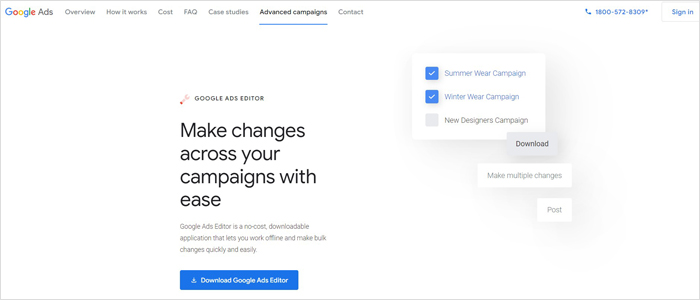
Google Ads Editor is a free desktop application that helps you create, track, and edit Google Ads. It also allows bulk editing across multiple ad accounts at the same time. It’s ideal for building campaigns, managing ad groups, and updating keyword bids efficiently. For a free program, it’s hard to beat.

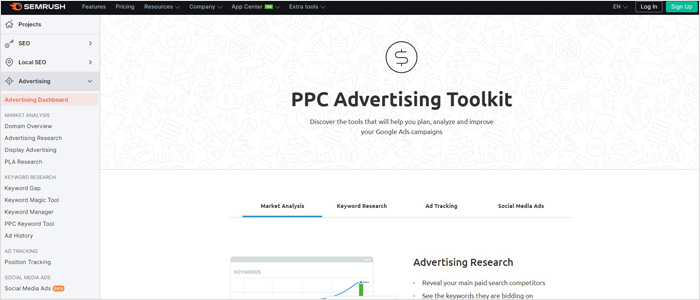
Semrush offers one of the most popular competitive research tools for PPC. Semrush’s PPC Ads Toolkit helps you track and assess google ads across search engines and social media platforms. Its keyword magic tool supports keyword automation tools by analyzing search volume, cost per click estimates, profitable keywords, and suggested keywords across the most popular search engine. With it, you can perform keyword research and see how your google ads perform against your competitors. Subscriptions start at $119.95/month.

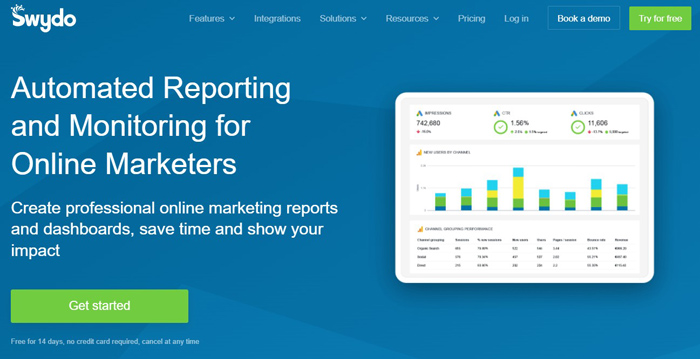
Swydo provides automated ad reporting and monitoring through analytics tools. It integrates data sets from different ad platforms like Facebook Insights and Google Ads so you can have it all in one place. It allows teams to create custom reports, analyze campaign performance, and gain data driven insights from multiple advertising networks. You can try Swydo for free, after which the pricing starts at $39/month.

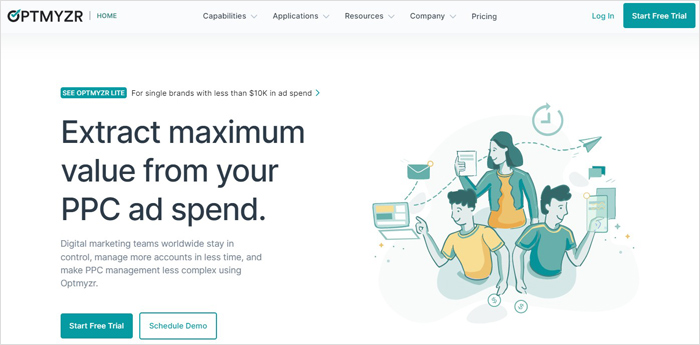
Optmyzr is a PPC automation tool you can use with Bing ads and Adwords. It uses AI to help you add and remove keywords, change placements on display networks, change bids, and more. Optmyzr supports automated bidding, bid management, and continuous account monitoring across Microsoft Ads and Google Search. It’s a strong option for data driven advertisers focused on keyword optimization and better campaign performance. They offer a free trial, after which subscriptions start at $208/month.

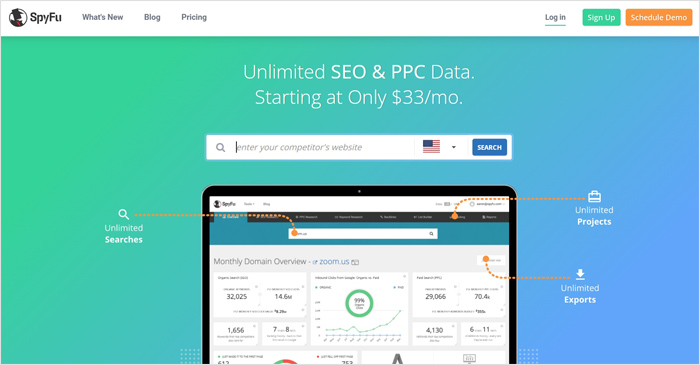
Spyfu is a competitor keyword research tool that gives you keyword ideas. SpyFu combines competitor research with keyword optimization and paid search insights. It’s especially useful for analyzing ad copy, testing ad variations, and identifying profitable keywords. But it also helps you do backlink outreach, run custom reports, and more. As of this writing, they have a limited-time $9/month offer. But their regular basic plan starts at $33/month.

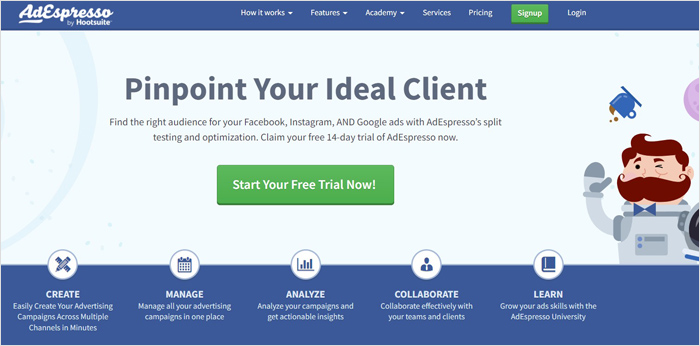
AdEspresso is a one-stop solution for managing and optimizing your ads on Facebook, Instagram, and Google. AdEspresso supports ad testing, ad copywriting, and ad variations across Meta Ads, LinkedIn Ads, and other social media advertising platforms. It helps optimize individual ads and landing page performance, especially for mobile users, and it helps you save time from switching between different platforms and channels.
Plus, AdEspresso lets you collaborate with client accounts if you run Google ads for others. You can test it with a free 14-day trial, after which pricing starts at $49/month.

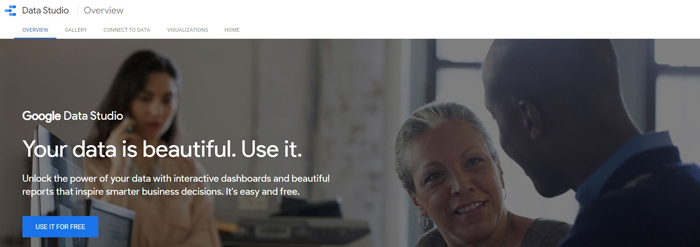
Google Data Studio isn’t strictly a PPC automation tool. But it helps you visualize campaign performance data using custom reports, data analysis, and modern analytics tools. This is nice for importing ad campaign/PPC Campaign data and sharing it with others in meetings. Importing Google ad data is especially easy. It integrates seamlessly with Google Analytics and Google Sheets to support campaign management. And best of all, it’s free.

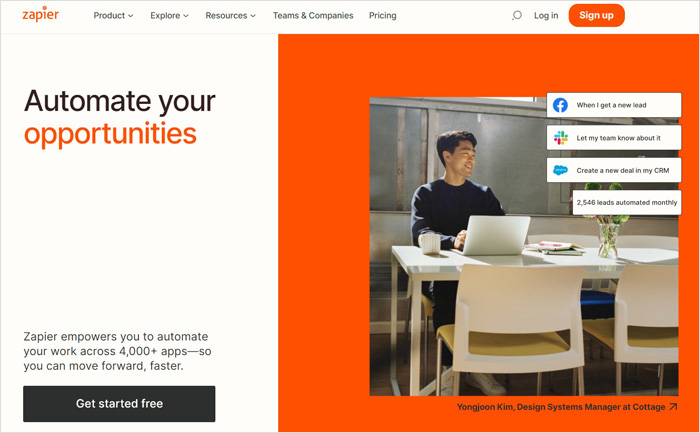
Zapier isn’t just a PPC automation tool either. But it can save you time on your PPC ads campaign by automating workflows. Zapier automates workflows between PPC tools, digital marketing platforms, and eCommerce platforms. Any manual tasks that you find yourself doing repeatedly, you can automate through a “zap.” It’s ideal for automating routine tasks like alerts, reporting, and account health monitoring. Try it out for yourself with a free trial and then pay as little as 19.99/month.

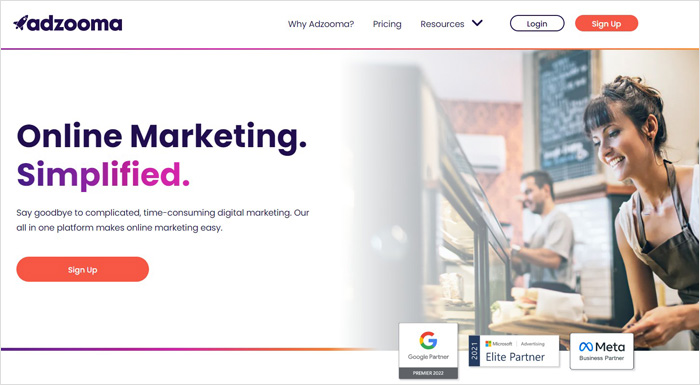
Adzooma supports managing campaigns across Google, Microsoft Advertising, paid search, and Meta Ads. What’s unique about this tool is its ability to check accounts every 30 minutes to automatically adjust ad budgets and improve performance. Its automated bidding strategy, budget management, and monitoring features help reduce wasted ad spend.
You can also set up custom alerts to react to changes immediately. Try it for free for limited features and then upgrade to a paid plan later.

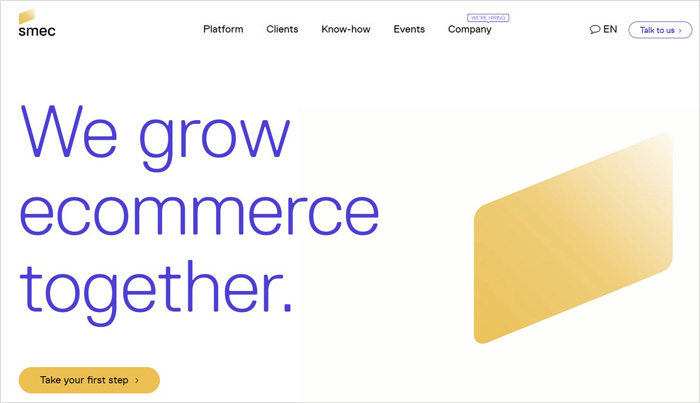
Smec is geared toward eCommerce businesses running Google Shopping, Google Shopping campaigns, and smart campaigns. It helps you manage and automate ad campaign across multiple platforms and provides retail insights about shopping behavior so you can identify opportunities to grow your business. It supports bidding strategies, keyword bids, and optimizing campaigns for ecommerce growth. If you’re in the retail space, Smec is a must.
Choosing the right PPC automation tool takes time, but the right approach can lead to better campaign performance and long-term business growth.
You may not see results immediately, but eventually, your ad campaign will perform better, and you’ll need to ad spend less time on them.
If you’d rather not rely on multiple tools, consider partnering with PPC.co. We provide comprehensive suite of PPC management services /PPC Managers with proven results. We help brands reduce wasted ad spend, improve campaign performance, and drive business growth.
Our expert team specializes in paid search, digital advertising, Microsoft Ads, LinkedIn Ads, social media advertising and can optimize your Google Ad campaigns across Google, Facebook, LinkedIn, YouTube, and more. Whether you’re struggling with display ads or Google Ads retargeting, we can help.
We can also help you combine your SEO and PPC strategies so they effectively match!
Contact us today to get a free proposal!

Throughout his extensive 10+ year journey as a digital marketer, Sam has left an indelible mark on both small businesses and Fortune 500 enterprises alike. His portfolio boasts collaborations with esteemed entities such as NASDAQ OMX, eBay, Duncan Hines, Drew Barrymore, Price Benowitz LLP, a prominent law firm based in Washington, DC, and the esteemed human rights organization Amnesty International. In his role as a technical SEO and digital marketing strategist, Sam takes the helm of all paid and organic operations teams, steering client SEO services, link building initiatives, and white label digital marketing partnerships to unparalleled success. An esteemed thought leader in the industry, Sam is a recurring speaker at the esteemed Search Marketing Expo conference series and has graced the TEDx stage with his insights. Today, he channels his expertise into direct collaboration with high-end clients spanning diverse verticals, where he meticulously crafts strategies to optimize on and off-site SEO ROI through the seamless integration of content marketing and link building.


Throughout his extensive 10+ year journey as a digital marketer, Sam has left an indelible mark on both small businesses and Fortune 500 enterprises alike. His portfolio boasts collaborations with esteemed entities such as NASDAQ OMX, eBay, Duncan Hines, Drew Barrymore, Price Benowitz LLP, a prominent law firm based in Washington, DC, and the esteemed human rights organization Amnesty International. In his role as a technical SEO and digital marketing strategist, Sam takes the helm of all paid and organic operations teams, steering client SEO services, link building initiatives, and white label digital marketing partnerships to unparalleled success. An esteemed thought leader in the industry, Sam is a recurring speaker at the esteemed Search Marketing Expo conference series and has graced the TEDx stage with his insights. Today, he channels his expertise into direct collaboration with high-end clients spanning diverse verticals, where he meticulously crafts strategies to optimize on and off-site SEO ROI through the seamless integration of content marketing and link building.
This report compares the month over month performance across the date ranges of December 1st - 31st 2025 and January 1st - 31st 2026.
For the month of January, we found the results to be quite impressive and optimistic, with the highlighted results below:
Overall, the results for Nutrition/Health Product Company in January were positive across the board, with each campaign garnering more conversions, lower cost per conversion, and significantly increased month over month ROAS.
Management of this account is going better than anticipated, and we will continue to find opportunities to garner more conversions and drive ROAS up as much as possible through bid modifications and the addition of new, contextually relevant keywords.
____________________________________________________________________________
January’s performance demonstrates a meaningful shift from learning to efficient acquisition:
This indicates that every £1 spent returned £7.90 in revenue; 6.5x more than December’s 122% ROAS.
MoM Campaign Comparison
January - Nutrition/Health Product Company - 29.33 conversions, £6.76 CPA, 14.04% conversion rate (1389% ROAS)
December - Nutrition/Health Product Company - 8.28 conversions, £42.84 CPA, 3.30% conversion rate (129% ROAS)
MoM increase of 1260% ROAS
January - REMARKETING - 6.27 conversions, £9.41 CPA, 8.33% conversion rate (627% ROAS)
December - REMARKETING - 3 conversions, £55.88 CPA, 0.44% conversion rate (168% ROAS)
MoM increase of 459% ROAS
January - PMAX - 15.10 conversions, £10.56 CPA, 5.74% conversion rate (422% ROAS)
December - PMAX - 5.22 conversions, £63.11 CPA, 1.29% conversion rate (negative ROAS)
MoM increase of 422%+ ROAS
January - Local Doctor Campaign - 4 conversions, £16.55 CPA, 5.71% conversion rate (264% ROAS)
December - Local Doctor Campaign - 3 conversions, £30.58 CPA, 3.26% conversion rate (160% ROAS)
MoM increase of 104%+ ROAS
This campaign benefits from high intent brand-adjacent queries combined with carefully controlled generic terms, making it one of the most reliable drivers of low-cost, and more volume of conversions. Continued prioritization here will compound returns.
Day-of-Week Performance
| Day | Campaign | Conversions | CPA | Conversion Rate |
|---|---|---|---|---|
| Wednesday | Nutrition/Health Product Company | 3 | £3.29 | 50% |
| Thursday | Nutrition/Health Product Company | 3 | £2.93 | 27.27% |
| Location | Campaign | Conversions | CPA | Conversion Rate |
|---|---|---|---|---|
| United Kingdom | PMAX Shopping | 15.10 | £10.56 | 5.74% |
| United Kingdom | REMARKETING | 11.57 | £9.31 | 8.90% |
Certain regions are showing higher purchase intent, such as the UK and Greater London this month. Geographic bid multipliers can be further refined to capitalize on these micro-markets, all the way down to the zip code, and we’re in the process of doing this.
| Audience Segment | Campaign | Conversions | CPA | Conversion Rate |
|---|---|---|---|---|
| Ages - 55-64 | Nutrition/Health Product Company | 5 | £2.10 | 38.46% |
| Gender - Unknown | Nutrition/Health Product Company | 10.33 | £4.01 | 20.67% |
| Household Income - Unknown | Nutrition/Health Product Company | 18.33 | £4.42 | 18.71% |
Keyword Performance
Top keywords show clear brand and authority alignment:
These terms demonstrate exceptional intent density and should remain protected with:
Expansion into close-variant and long-tail branded queries
| Device | Campaign | Conversions | CPA | Conversion Rate |
|---|---|---|---|---|
| Computers | Nutrition/Health Product Company | 13.33 | £5.54 | 21.16% |
| Mobile Devices | Nutrition/Health Product Company | 15 | £8.19 | 10.56% |
January’s performance reflects extremely strong numbers month over month and we are more than thrilled with the performance, with main highlights being:
With continued optimization and controlled scaling, we expect further efficiency gains and revenue growth in the coming months, and will be modifying based on the increase in CPCs.
Cybersecurity is arguably one of the toughest industries to compete in when it comes to paid advertising. You’re basically selling to tech-savvy, skeptical buyers like CISOs, IT directors, compliance officers, and security teams. Most cybersecurity companies tend to expect hard proof of all claims and you can’t capture their attention easily. Generic ads and broad PPC marketing tactics won’t cut it in this competitive landscape. Because of this, high CPCs across major search engines, vendor saturation, and long evaluation cycles mean that poorly targeted cybersecurity PPC campaigns can be a huge waste of advertising spend.
To win in this arena, firms need advanced PPC for cybersecurity strategies like targeted intent segmentation, tightly aligned messaging, intelligent audience modeling, AI-powered optimization and bid strategies, technically accurate ad copy, and conversion paths designed for enterprise-level buyers. In this article, we’ll dive into the advanced cybersecurity PPC techniques modern cybersecurity firms must use to generate high-quality leads, reduce wasted ad spend, and stand out in a highly crowded search space.
Cybersecurity search queries represent a wide range of intent that spans from broad research to urgent remediation needs. You don’t want to treat all search terms the same or you’ll waste most of your ad spend. Here’s what you should do:
1. Segment keywords by intent
Start by dividing your PPC ads into cybersecurity PPC campaigns based on the following general categories of user intent:
· Educational. These searches might include terms like, “What is endpoint security?” and “Types of cyber threats.” They support content marketing, awareness-stage paid campaigns, and early-funnel marketing efforts.
· Research. These are phrases like “Buy SIEM software” and “24/7 SOC as a service price.” These keywords align with cybersecurity marketing services, gated assets, and evaluation-stage marketing strategies.
· High urgency. Urgent searches are phrases like, “Ransomware removal help now” and “Breach response service.” These searches demand immediate cybersecurity solutions and direct-response PPC advertising with strong CTAs.
This segmentation ensures you match your ad copy, ad relevance, landing pages, click through rates, and offers to exactly where the buyer is in their journey. This improves the relevance of your ads, reduces wasted ad spend, and increases conversions and overall campaign performance.
2. Prioritize longtail and high-intent keywords
Using long tail keywords and targeted keywords attracts higher-quality website traffic. These terms usually reduce marketing costs, improve conversion rates, and drive more efficient paid advertising.
3. Use negative keywords to filter out irrelevant traffic
Since a wide range of people search for cybersecurity terms, including students, hobbyists, and researchers, every marketing agency should use a negative keyword list to filter out irrelevant searches will protect advertising spend. For example, filter out queries using the terms “free course,” “tutorial,” and “certification exam.” Anyone searching for these phrases is unlikely to be looking for a cybersecurity product or service. This ensures your PPC campaigns reach potential customers, not job seekers or students.
The best compelling ad copy will fall flat if they don’t reach the target audience who make purchase decisions. If you cast your net too wide, you’ll miss those people. Many people searching for keywords related to cybersecurity are just curious or looking for free solutions. AI-driven ad targeting allows cybersecurity marketers to refine their highly targeted audiences and focus on the people who are most likely to convert.
To identify the right targets, you can use AI and upload campaign data from your CRM, like MQLs, SQLs, demos, and closed deals into Google Ads and Google Analytics so the model can learn what a “good lead” looks like. This will help you build a lookalike audience that represent your best customers – the people most likely to buy your cybersecurity offers.
Cybersecurity buyers are usually high-level roles in regulated industries. To reach them you can use filters for specific industries like healthcare, finance, enterprise tech, etc. and also filter for company size, geography, and job titles (like CISO, IT director, compliance, etc.). This is the best way to minimize wasted clicks and build targeted campaigns that improve campaign effectiveness and drive better data driven decisions.
Cybersecurity buyers expect total clarity, accuracy, and trust. They don’t respond to vague or sensationalized copy. To get their attention, use specific terms thar resonate in the cybersecurity world. Terms like: SEIM, MDR/XRD, SOC as a service, IAM/PAM, 247 monitoring, zero trust, end-to-end encryption, and compliance-ready. These phrases signal credibility.
Keep in mind that regulated industries are highly concerned with compliance, so highlight frameworks like HIPAA, PCI-DSS, SOC 2, and ISO 27001 when relevant. These small signals can be powerful triggers. Including compliance language boosts ad quality, improves search engine rankings, and increases ad visibility across search results.
The best cybersecurity ads will create urgency and offer a benefit-led call to action. Ads like “Protect your business from ransomware now – schedule a free security assessment” and “Ensure 24/7 threat detection for your enterprise” work better than vague promises. By speaking the language of your buyers and addressing their real fears and needs, your ads will appear more credible. This approach consistently produces successful PPC campaigns and supports scalable cybersecurity PPC advertising.
Great ads will get clicks, but your landing pages decide whether someone converts. For cybersecurity brands, generic “contact us” landing pages (and homepages) won’t cut it. Successful PPC campaigns rely on intent-matched landing pages to convert potential clients. You need threat-specific, offer-focused landing pages where the copy matches exactly what’s in the ad. For instance, if the ad is for ransomware protection that’s what the landing page needs to promote. Whether it’s a cloud security audit, SOC as a service, or a compliance assessment, make sure your ads and landing pages match. This improves seamless user experience, increases conversion rates, and supports long-term business growth.
| Search / Ad Intent | Best Landing Page Type | What the Page Must Say | Proof & Authority to Add | Conversion Offer (Best CTA) |
|---|---|---|---|---|
|
Threat-specific Example: ransomware protection, breach response |
Single-threat page with a clear outcome and scope (what you protect, how fast, for whom). |
|
|
Free assessment / incident readiness check + “Book a call” for high-urgency buyers. |
|
Service-specific Example: MDR/XDR, SOC as a service, SIEM |
Service page that maps capabilities to outcomes + “how it works” section. |
|
|
“Request a demo” + optional ROI calculator / sample report download. |
|
Compliance intent Example: SOC 2 readiness, HIPAA security |
Compliance-focused page that leads with frameworks, evidence, and audit-friendly language. |
|
|
Compliance readiness evaluation / gap analysis + “Talk to an expert”. |
|
Research / comparison Example: “best XDR,” “SIEM vs SOAR” |
Comparison page or guide-style landing page with a clear recommendation path. |
|
|
Download guide / checklist (gated) + retarget to demo/audit offer. |
|
Value-first Example: posture quiz, vulnerability scan |
Tool / diagnostic landing page designed to deliver immediate value in minutes. |
|
|
“Get results” (primary) → “Book a consult” (secondary). |
Use case studies, certifications, compliance credentials, client logos if they allow for that, audit results, and security whitepapers to build trust with your audience. These elements can help buyers overcome their initial skepticism and compliance concerns.
Using a value-first approach is a great way to get more relevant clicks through cybersecurity lead generation and filters buyers actively seeking solutions. All you need to do is offer value people can access immediately. For example, free vulnerability assessments, security posture quizzes, and compliance readiness evaluations are all valuable on the spot. They also filter high-intent leads that are more likely to book a demo or discovery call with you. This strategy improves campaign performance, increases lead generation, and helps convert leads into pipeline opportunities.
Cybersecurity sales don’t usually happen on the first click. They often involve multiple stakeholders, extended review processes, compliance checks, and internal approvals. It won’t work to use one-click, last-click attribution.
· Use data-driven, multi-touch attribution models. These models credit all meaningful touchpoints (not just the final click) to give you a clear picture of how your PPC ads are contributing to real conversions over time. It helps justify ad spend and reveals which ads, keywords, and campaigns are influencing your decisions.
· Sync PPC leads with CRM and offline conversion data. Track your leads through all stages (MQL, SQL, Demo, Proposal) and feed this data back to your PPC platforms to train the algorithm on what quality conversions actually look like for you. This is how you’ll improve your targeting and bid optimization.
· Combine retargeting and content marketing. Buyers often visit a site multiple times before deciding to buy. Use remarketing gated content (like whitepapers and threat reports, webinars, and email sequences to nurture leads and lead them toward a purchase.
For B2B cybersecurity firms, a multi-touch, multi-step conversion funnel is the most realistic way to measure PPC ad success. Multi-touch attribution allows teams to track key performance indicators, analyze campaign data, and uncover valuable insights.
Using data insights, actionable insights, and data driven insights helps teams refine PPC strategy and justify marketing costs.
Cybersecurity keywords can be pretty expensive. Without intelligent bidding, you’ll overspend and underserve. AI-driven bid strategies, including a smart bidding strategy, optimize bids across search engines in real time. This reduces marketing costs, improves efficiency, and drives sustainable revenue growth.
Automated bidding strategies like Target CPA, Target ROAS, and Max Conversions are ideal when trained with clean, qualified conversion data. These strategies will adjust your bids based on the time, device, location, user behavior, and competitive factors – all elements humans can’t easily track at scale.
While it’s nice to get leads who visit your site and even fill out your form, keep your priority on conversion quality, not just volume. Don’t just optimize for clicks or form fills. Feed your bidding models real conversion events like qualified leads, demos booked, and deals closed. Empty form submissions aren’t helpful – your goal should be to build a real pipeline.
Most importantly, test and refine your ads continuously by split testing your ad copy and landing pages to see what works best. In cybersecurity PPC, even small tweaks can yield big results because you’re targeting a narrow, high-intent audience. With a well-trained AI bidding system, your campaigns will do well even in a competitive market.
Since cybersecurity buyers don’t convert on hype, value is essential. Long-form assets like whitepapers, threat reports, case studies, and compliance guides strengthen content marketing, improve online visibility, and support paid advertising across social media platforms, LinkedIn Ads, Twitter Ads, and Bing Ads.
Use your PPC ads to drive traffic to content offers like “2025 Ransomware Trend Report,” “Enterprise Security Readiness Checklist,” or “Cloud Compliance Guide.” These types of content will draw in decision makers who are researching solutions.
Make sure you gate the content you provide to people who click on your ads. Use progressive profiling forms that adapt to the user’s role or company size (if possible) to capture qualified leads. Then feed those leads directly into your lead nurturing workflows and retargeting sequences.
After a lead has downloaded your information or has made the first engagement, retarget them with ads offering free audits, demos, case studies, or consultations. This approach increases immediate visibility while building trust in the cybersecurity space and is highly effective for the long B2B sales cycles that exist in cybersecurity.
Since cybersecurity buyers usually need time to make a purchase, retargeting has to be precise. General remarketing will just burn through your ad budget and will be ignored by serious buyers.
To create specific segments for remarketing, start with intent and behavior. For example, if a user visited a ransomware page, don’t show them ads with general security content. Serve them ransomware-specific ads.
For the best results, segment your remarketing audiences based on:
· Pages visited (threat type, service)
· Actions taken (whitepaper downloaded, demo requested, form filled)
· Role/company size (if available)
Then tailor your messaging by funnel stage. Start with the awareness stage and offer more educational content like guides and webinars. For those in the consideration stage, push case studies, vendor comparisons, and ROI calculators. Finally, for those making the decision to buy, offer demo scheduling, free audits, and compliance checklists.
Be sure to always exclude low-intent and irrelevant audiences. There will always be researchers, students, job seekers, and random curious tire kickers searching for cybersecurity keywords. As discussed earlier, use negative keywords and exclusion lists to avoid wasting your ad spend.
Segmented remarketing improves ad relevance, strengthens marketing messages, and boosts click through rates. This approach supports successful campaigns while reducing wasted advertising spend.
Threat education + “what good looks like” checklist.
Downloaded asset → advance to Consideration.
Case study + outcome metrics (time-to-detect / time-to-respond).
Visited pricing/demo page → advance to Decision.
Security & compliance + “talk to an expert.”
Booked call/demo → exclude from prospecting retargeting.
“You downloaded X” → offer a shorter checklist or webinar clip.
Visited product/service page → advance.
ROI / TCO + “how teams implement this.”
Started demo form / assessment → advance.
Compliance pack + reference architecture.
Sales-qualified action → exclude; nurture via email/SDR.
“See how it works” + short product video / walkthrough snippet.
Revisited demo/pricing → advance.
Objection ads: integrations, deployment time, support, reporting.
Clicked “Book” or opened calendar → advance.
Clear next step: “Get a tailored assessment” or “Book a demo.”
Meeting booked → stop ads or switch to onboarding content.
Since many cybersecurity buyers are evaluating multiple vendors at the same time, competitor conquest campaigns can be highly effective if done correctly.
The right way to do this is to target your competitors’ weaknesses while maintaining compliant messaging. Avoid naming your competitors directly to stay within ad policies but highlight how your offering solves common complaints about your competitors. For instance, you might note that you have “Faster setup,” “Better support,” “Flexible pricing,” or “Stronger compliance reporting.”
Build out landing pages that compare your features to your competitors’ features without naming names. Show real differentiators like detection speed, compliance, and support, and highlight testimonials or case studies from clients who “switched from Vendor A.”
Never expect single clicks to convert. Treat competitor conquest campaigns like the first touchpoint in a series. Pair it with remarketing, content nurture, and follow-ups to maximize conversions from buyers who are currently in evaluation mode.
PPC ads can generate plenty of leads for your cybersecurity business, but closing deals will require a strong sales strategy. That’s why aligning your PPC campaigns with your sales workflows can help.
Sync your ad data with your CRM for full visibility. Capture data on keywords, ad groups, landing pages, and funnel stages for every lead. This will help your sales team know exactly what triggered their interest so they can tailor their follow-up conversations accordingly.
Provide your sales teams with assets to help your messaging stay consistent. For example, give them your case studies, compliance docs, whitepapers, audit reports, and technical comparisons. Doing so will help them maintain credibility when engaging with potential clients.
When PPC efforts align with sales workflows, marketing teams help cybersecurity businesses close deals faster. This improves campaign effectiveness, reduces friction, and lowers customer acquisition cost.
The cybersecurity industry is a battlefield. A basic PPC campaign won’t work when you’re competing for attention in the cybersecurity industry. The firms that invest in cybersecurity marketing, cybersecurity PPC, and data-backed marketing strategies know that precision and trust win conversions across digital channels. To win leads, you need to reach targeted audiences with intent-driven keywords and technically correct messaging, and it all needs to align with your sales process.
If your competitors are using these strategies and you’re not, you’re invisible. This is the time to sharpen your strategy and strengthen your funnel by implementing a stronger PPC strategy.
If you want to generate qualified enterprise leads, reduce wasted ad spend, and build a scalable, data-driven PPC engine that speaks directly to cybersecurity decision makers – an experienced cybersecurity marketing agency like us can help.
At PPC.co, we specialize in building paid ad strategies that convert clicks into real clients. Contact us today and we’ll position your firm as the credible, trusted authority cybersecurity buyers want.
Get Latest News and Updates From PPC.co! Enter Your Email Address Below.

For nearly 15 years, PPC.co has provided expert pay-per-click consulting services to SMEs and Fortune 500 companies alike. Let us make your paid campaigns shine!
© 2024 PPC.co, All rights reserved.