
Best Emerging AI Tools In Paid Search Marketing
Explore AI tools that revolutionize PPC management, automate workflows, and significantly improve overall campaign performance.

Artificial intelligence has changed how marketers plan, launch, and improve paid search campaigns. Years ago, campaign managers spent hours checking search terms, adjusting bids, rewriting ad copy, and trying to stretch every dollar of ad spend.
That work still matters, but the tools have changed.
Today, the best marketers use AI tools to move faster, spot patterns, and make smarter decisions across Google Ads, Amazon PPC, Meta Ads, LinkedIn Ads, Microsoft Advertising, and other ad platforms. These AI powered tools help with keyword research, negative keywords, PPC management, campaign optimization, landing page testing, ad variations, and budget decisions.
According to the Gartner report, the adoption of artificial intelligence during 2018-2019 increased from 4% to 15%, and it shows no signs of slowing down.
The goal is not to replace smart marketers. It is to give PPC teams better data, faster feedback, and more confidence when managing PPC campaigns.
What Makes Artificial Intelligence So Popular?

AI has taken over the business world because of its ability to improve precision, deliver accurate results and increase job efficiency.
In paid media, small mistakes can get expensive quickly. A weak landing page, poor keyword strategies, bad targeting, or missing negative keywords can drain an advertising budget before anyone catches the problem.
That is where AI tools can help.
The best AI systems can review campaign data, search trends, user behavior, conversion paths, and performance patterns across several ad platforms. Instead of manually digging through every report, marketers can use actionable insights to decide where to spend more, where to cut back, and where to test new ad copy variations.
Moreover, practical algorithms can enhance the capabilities of gadgets like GPS tracking devices, voice assistance, and home automation systems, helping them adapt to new input via progressive machine learning techniques. On the other hand, AI-powered applications also automate corporate operations, personalize service delivery, and provide company-specific insights.
For example, AI can help:
- Find wasted ad spend
- Suggest stronger ad copy
- Review keyword research
- Spot missing negative keywords
- Compare performance across ppc campaigns
- Recommend bid adjustments
- Review landing page issues
- Build new ad variations for b testing
All in all, AI has changed the world due to its extraordinary capacity to evaluate and learn from data. Medical, finance and marketing are just a few areas that have a strong demand for AI skills.
How Is Artificial Intelligence Shaping Digital Marketing?
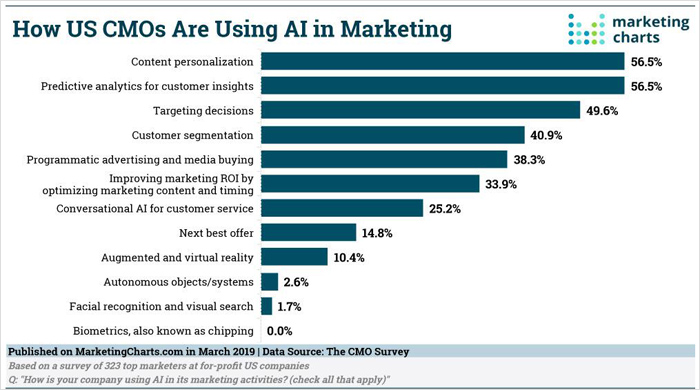
AI has forever altered the way we identify digital marketing trends, thanks to excellent data analysis and its capacity to react to the input. Brands and marketers also use AI-led digital marketing to save time and resources through automation.
Here is how AI helps digital marketers:
- Assists You In Better Understanding Your Audience: AI can analyze data to forecast your target consumers’ purchasing habits, user behavior, and decisions. This matters because modern PPC campaigns are no longer limited to one search campaign inside Google Ads.
- Enhances User Experience: You may utilize AI data to give your audience exactly what they require
- More Effective Marketing: AI assists you in eliminating guessing. It can help you develop a more effective digital marketing plan for your company
- Enhances Productivity: AI algorithms can be used to automate a variety of monotonous activities. This can help you boost productivity while also saving your time and money
- Boosts ROI: AI empowers decision-making and also assists in the creation of higher-performing content. Using AI digital marketing tactics, you can target the correct audience with irresistible offers
As AI becomes more widely available, marketers can now use it to analyze data, predict future trends, and enhance the quality of their brand. As a result, the way a brand conducts digital marketing has also evolved.
But, what does this mean for the year 2026?
First, businesses must adopt a more customer-centric approach and reinvent their marketing models to incorporate AI.
AI already automates manual and repetitive tasks, and the chances are that it will soon supplement human decisions as well. Furthermore, its growth will generate many good jobs while also altering the way current jobs are performed.
Many brands now run campaigns across Google Ads, Amazon PPC, Meta Ads, LinkedIn Ads, Microsoft Advertising, Google Shopping, and other ad platforms. That creates more data, more decisions, and more chances for mistakes.
AI helps marketers:
- Understand the target audience
- Improve campaign management
- Review paid media performance
- Compare results across ad platforms
- Create better ad variations
- Track search visibility
- Support AI visibility
- Find useful search volume patterns
- Improve PPC management
Digital marketers are looking for ways to use AI to satisfy the ever-evolving customers’ expectations. This is particularly the case for established businesses that have relied on traditional marketing methods for a very long time.
A marketer still needs experience and judgment. AI can suggest changes, but it does not always understand your customer, your offer, or your sales process. That is why leveraging AI tools works best when a human checks the logic before making major changes.
Advantages Of Using Artificial Intelligence For Digital Marketing
It is essential to realize that technological solutions are growing smarter, but so are your customers. They are knowledgeable and favor quick response platforms and search engines.
Artificial intelligence is being widely used in digital marketing, but why?
Let’s discuss some of its advantages.
Advanced Search
38% of consumers believe that customer service can be improved by using AI. AI and big data solutions can evaluate user search trends and assist digital marketers in identifying important areas where they should focus their efforts.
Smart Marketing Strategy
AI enables digital marketers to create innovative advertising campaigns across social media sites where the targeted audience spends their time.
Automates Marketing Process
Marketing automation is similar to refueling traditional marketing businesses with several new technologies. Using AI, all manual digital marketing tasks will be automated.
Personalized Content Delivery
Digital marketers can use AI tools to utilize the data and target the right audience at the right time. Marketing teams can use artificial intelligence tools and solutions in digital marketing to find potential buys and send personalized content that meets their needs.
Chatbot Services
Retaining customers was a difficult task for digital marketers earlier. However, they can now effectively serve, delight, and engage them with AI-powered customer service Chatbots. As a result, more than half of digital marketing firms rely on customer service bots to increase conversion rates.
More Revenue Than Your Competitors
One of the most significant advantages of using artificial intelligence in digital marketing is that it analyzes competitors’ moves and helps you generate more revenue than before. Moreover, AI assists marketers in identifying patterns that are likely to harm the future of the marketing business.
Artificial Intelligence Digital Marketing Tools You Must Use
As the world has shifted to digital marketing, AI plays an essential role in optimizing and rationalizing marketing campaigns. There are several PPC tools and AI tools that the world uses to eliminate errors and to promote their business efficiently.
Some are built for Google Ads. Some focus on Amazon PPC. Some help with ad copy, keyword research, competitive analysis, reporting, or PPC management across many ad platforms.
Here is a list of AI tools for digital marketing that can help you boost your business:
- Phrasee
- Personalize
- HubSpot SEO
- Acrolinx
- MarketMuse
- ChatFuel
- Jetlore
- Albert AI
- Crayon
- Google ads automated bidding
- Persado
Let’s explore these in detail.
Phrasee
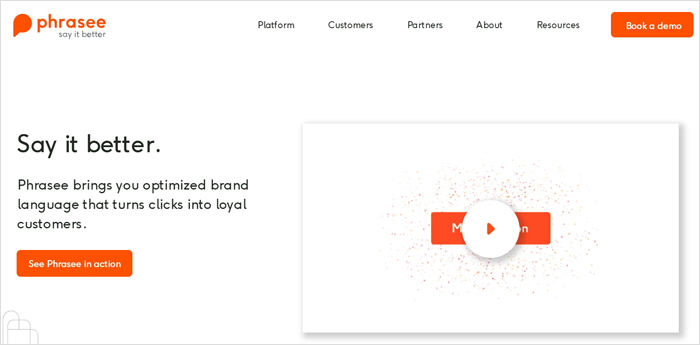
With the use of AI, Phrasee helps you write email subject lines creatively. In addition, Phrasee’s AI-powered NLG technology generates several human-sounding ad copy variations to fit your overall brand identity.
While it is often known for email and brand language, the same idea matters in paid search. Marketers need clear, persuasive copy that matches the target audience and fits the offer.
Moreover, It employs customized language standards for all consumers to guarantee that each delivered copy is accurate for them. And the algorithm is persistent, which means that when you send the outcomes to Phrasee, it analyzes the consumer behavior for the future. Instead of starting from a blank page, teams can generate several options, refine them, and use the best ideas in Google Ads, Meta Ads, or other ad platforms.
Key Features
- Instantly creates several natural-sounding ad copy models that define the brand identity
- Creates language models that are unique to each consumer
- Determines the consumers’ reply and recreates the prognostic prototype
Personalize
This AI technology determines the items and services that your audience prefers at any particular time. The tool employs a formula to determine the best interests of each contact, which are constantly updated based on their search history.
That matters because user behavior should shape how campaigns are built. Someone researching a broad problem needs a different message than someone comparing pricing or ready to book a demo.
Moreover, it provides the data you require to build focused marketing and sales efforts that boost response rate, conversion rates, and client preference.
For PPC campaigns, this kind of insight can help with audience segmentation, remarketing, and message matching. It can also improve landing page personalization by showing different benefits to different audience groups.
Key Features
- Analyzes the topmost interests of individuals
- Compatible with customer relationship management
- Simple to use
- SMBs may benefit from this technology at a cheap cost
HubSpot SEO
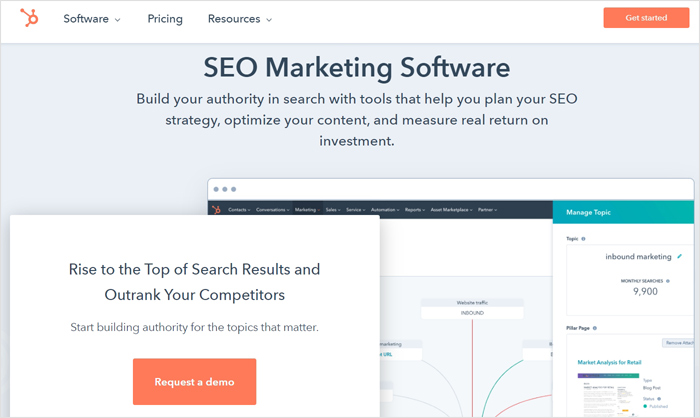
HubSpot SEO is a crucial AI tool for people in the content department. Machine learning is used to evaluate how searchers perceive and classify your content as HubSpot SEO assists you in outranking your competition by improving your search engine ranks.
Websites that arrange their material around key themes or topics are rewarded by search engines. HubSpot SEO assists you in discovering and ranking for the subjects that are important to your consumers and organization. HubSpot SEO can support topic research, content planning, and search visibility, while PPC teams use those insights to shape better keyword strategies and ad copy.
Key Features
- Gives you suggestions for relevant keywords and related themes
- Helps you find topics that customers are looking for
- Works in tandem with all other HubSpot content products to assist you in creating a thorough strategy
Acrolinx
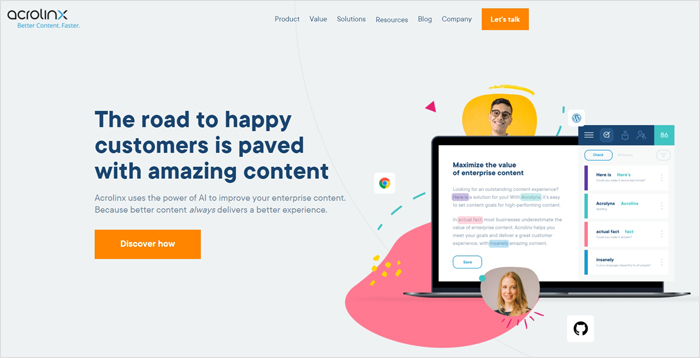
Acrolinx is a platform for content alignment that helps companies scale and improve the standards of content.
Acronlinx uses AI to assess existing material from your brand and ensure that it adheres to your brand guidelines. Afterward, it examines your available content to determine what works and where it may be improved.
That matters in paid search because people often see your message across several ad platforms before they convert. They might click a Google Ads result today, see LinkedIn Ads tomorrow, and land on a product page later in the week.
Acrolinx can help teams keep ad copy, landing page content, and campaign messaging aligned. This is especially useful for larger companies with several writers, agencies, or PPC teams involved in campaign management.
Moreover, the tool gives real-time feedback and ideas to help you improve your writing and strengthen unconvincing pages.
Key Features
- Audits and assesses available content to make sure it reflects your brand’s standards
- Looks for methods to make your material better and utilizes automation to expedite the editorial process
- Integrates over 50 applications and platforms, including Microsoft Word, Google Docs, WordPress, and most internet browsers
MarketMuse
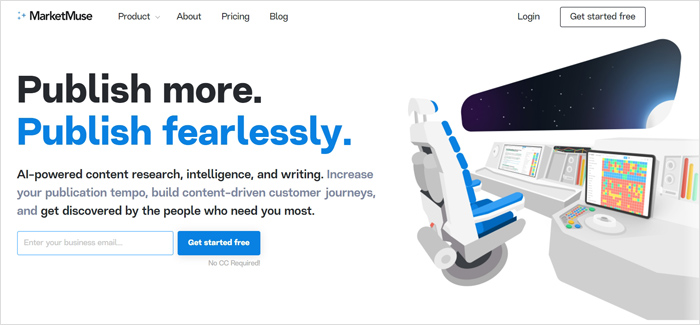
MarketMuse employs an AI-powered assistant to aid marketers in developing a content strategy.
The tool tells you the appropriate keywords to use in specific subject categories and advises target keywords for your content. Moreover, it identifies gaps and possibilities for additional material and ranks them based on their likelihood of impacting your results.
For example, if your site lacks content around a high-intent topic, sending traffic to a weak or unrelated landing page may hurt conversions. Better content can support better PPC campaigns, especially when paid and organic teams share insights.
The AI also analyses your work and compares it to hundreds of publications on a similar subject, and tells you what is missing on your website.
Key Features:
- Integrated editor displays how well you have written on the topic and what things should be improved
- Explores slits and possibilities for different content production, according to their likely effect and your ranking chances
ChatFuel
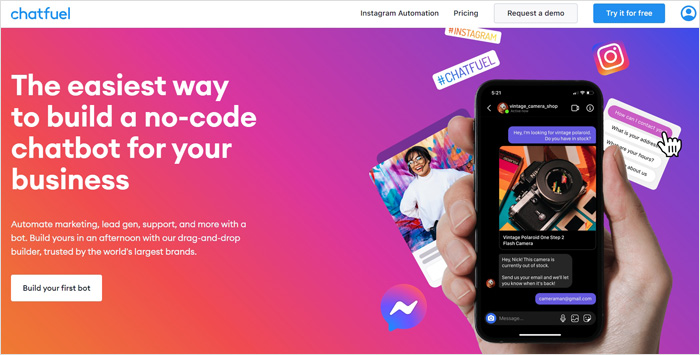
ChatFuel uses an intelligent bot to automate Facebook Messenger chats, which can support paid campaigns on social ad platforms. It is a famous AI chat solution, powering 46 percent of all Messenger automation solutions. Furthermore, it lets you automate FAQs and sales discussions and links customers to sales professionals in a live chat.
If someone clicks from Meta Ads and has a question before buying, a chatbot can help answer simple questions, qualify leads, and move people toward the next step.
This can support paid media campaigns by improving the post-click experience. It is not only about getting the click. It is about what happens after the click.
Key Features
- In a live chat, connect warm leads to salespeople
- Reduces support expenses by automating FAQs
Albert AI
Albert AI is one of the more relevant platforms for PPC management and cross-channel advertising. Albert AI is a software that produces marketing promotions for your company automatically. It analyzes massive quantities of documents and utilizes them to conduct self-optimized ads.
Albert allows you to feed in your targeted consumer and creative content and leverages information from its database to identify the essential qualities of a loyal customer. The company then finds potential consumers with those characteristics, conducts sample campaigns on fewer customers, improves the promotion, and posts it on a broader scale.
Moreover, Albert integrates with your current marketing technology stack, allowing you to continue using your accounts, advertising, social, search, and other tools. That can support campaign optimization, especially when managing several accounts or channels at once.
Key Features
- Large quantities of data are broken down to assist you in customizing campaigns
- Integrates with your martech stack and may be utilized across various digital media outlets like email, mobile, and content
Crayon
Running a business is a full-time job in and of itself. It might be challenging to keep track of your rivals’ activity. Competitors are testing new offers, new ad copy, new landing page angles, and new campaigns all the time.
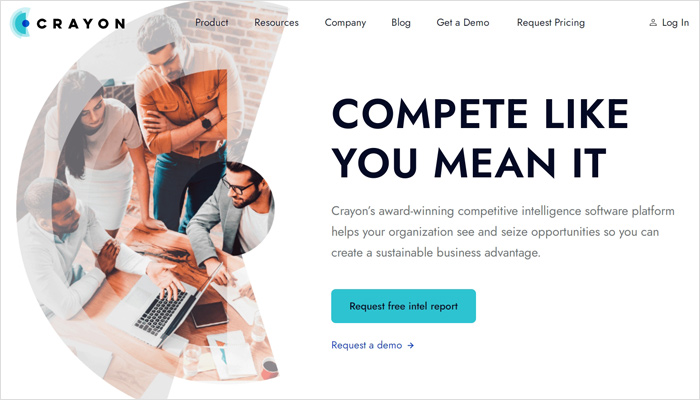
Crayon is useful for competitive analysis. Crayon is a popular intelligence tool that allows you to follow what your competitors do and avoid on their websites. It will enable you to track any competitor’s entire digital presence, capturing everything from new hiring, pricing, and products. These insights can improve Google Ads, paid media, and PPC campaigns by helping teams understand what the market is already seeing.
Key Features
- Tracks over 100 data kinds from over 300 million sources to offer a complete picture of your rivals
- On one dashboard, it combines both; external and internal insights
Google Ads Automated Bidding
Google Ads Automated Bidding eliminates the uncertainty and heavy lifting associated with creating bids to fulfill your performance objective. Unlike CPC bidding, there is no need to change bids for individual ad groups or keywords manually.
Google Ads automatically adjust bids for your ads based on the chance of that ad resulting in a click or conversion that helps you reach a specified business objective. This supports auction time bidding, where bids are adjusted during the actual ad auction.
Various automated bidding techniques can assist you in increasing conversions, clicks, and visibility.
Key Features:
- Eliminates the ambiguity and heavy lifting associated with creating bids
- Google Ads sets bids for your ads automatically
Persado
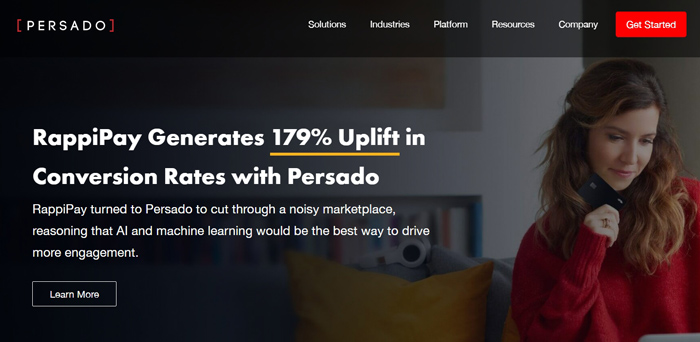
Social media marketers understand that communication with customers is key to building genuine relationships. However, it can be a bit challenging to do it online. For that, digital marketers use Persado.
This marketing language tool employs AI and machine learning to generate language most appealing to any particular audience, sector, or person.
For PPC, that can be useful when writing ad copy, testing ad variations, and improving landing page messaging. Different audiences respond to different triggers. Some want speed. Some want savings. Some want trust. Some want proof.
By evaluating previous campaign reactions, Persado generates emotional profiles for each consumer category. It may then tailor material for your target while incorporating your brand’s voice.
This is especially useful for brands running campaigns across many ad platforms, where messaging needs to stay consistent but still fit the channel.
Key Features:
- Allows you to communicate with the consumers
- Creates emotional profiles for each consumer category
Additional AI PPC Tools Worth Watching
Beyond the tools above, marketers should also look at specialized PPC tools built for specific platforms and workflows.
Some tools focus on Amazon PPC and Amazon PPC campaigns. Others help with Google Ads scripts, reporting, budget pacing, or an ads launch assistant workflow.
An ads launch assistant can be especially helpful before campaigns go live. It can check whether tracking works, the landing page is live, the advertising budget is correct, negative keywords are added, and campaign settings match the plan.
For Amazon PPC, look for tools that help with:
- Keyword harvesting
- Product targeting
- Bid optimization
- Wasted spend analysis
- Search term reviews
- Campaign structure
- Budget pacing
For Google Ads, look for tools that help with:
- Google Ads scripts
- Search term cleanup
- Responsive search ad testing
- Bid adjustments
- Budget alerts
- Broken URL checks
- Conversion tracking reviews
For broader PPC management, look for platforms that connect data from Google Ads, Meta Ads, LinkedIn Ads, Microsoft Advertising, Amazon Advertising, and other ad platforms.
The best setup may involve multiple tools, not one giant platform that tries to do everything.
The Wrap-Up
AI is already widely used in various industries, including healthcare, finance, retail, and e-commerce. It has created several chances for firms to get engaged in digital marketing.
Marketers have adopted AI for their digital marketing strategies since it assists them in tracking client preferences and behaviors.
In digital marketing, AI delivers more significant customer insights and provides exceptional service to its clients. However, the use of a successful marketing plan has been a source of consternation for marketers. With the help of artificial technology digital marketing tools, you can get the necessary insight, reducing the requirement for human operations in deep learning.
AI is changing paid search, but it is not removing the need for smart marketers.
The best results still come from strong strategy, clean data, clear offers, sharp ad copy, useful landing page experiences, and careful ppc management.
Use AI tools to make better decisions faster. Use AI PPC tools to review ppc campaigns, protect ad spend, improve keyword research, find negative keywords, and test better ad variations.
Use generative AI for ideas, but do not publish bland copy without editing it. Use automation tools to save time, but do not let them run without guardrails. Use Google Ads, Amazon PPC, and other ad platforms with a clear goal, not just because the platform recommends spending more.
The best AI tools are not magic. They are assistants.
They help you see what is working, what is wasting money, and where the next smart move might be. But the strategy still belongs to you.