
Meta Conversions API vs Server-Side GTM Setup Costs and Data Quality
Compare Meta Conversions API and server-side Google Tag Manager on real setup costs, engineering hours, match quality scores, and attribution accuracy for PPC.

Meta's Conversions API is not server-side tracking itself; it's a server-to-server channel Meta accepts that a cloud function or a server-side GTM container can feed. The 2026 stack decision is whether CAPI events ship from a bespoke endpoint or from sGTM.
Infrastructure cost, engineering hours, and Event Match Quality all move with that call, and the difference between the two stacks is narrower than vendor marketing implies.
Two Stacks Solve Different Problems
A direct CAPI integration is a POST request from your server to Meta's events endpoint for each conversion, built either in-house or through Meta's CAPI Gateway image. It serves one destination.
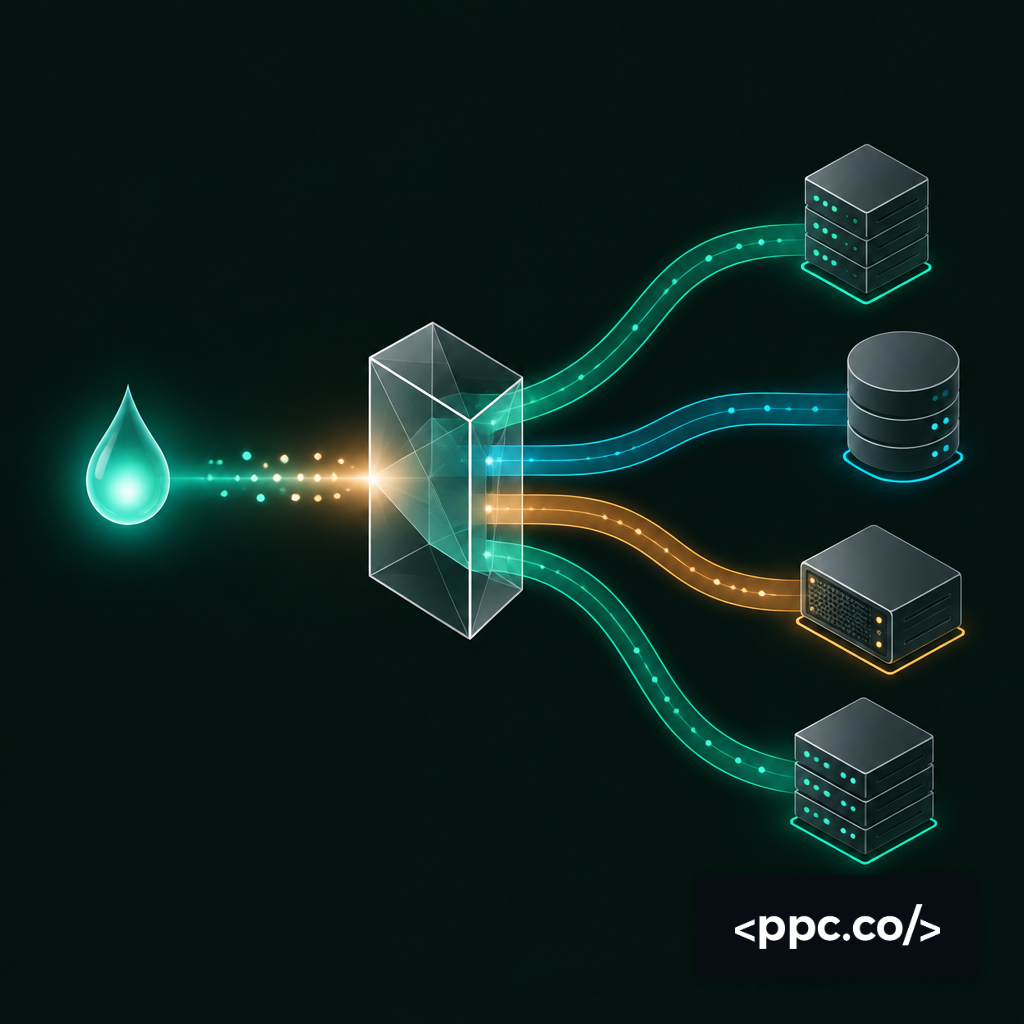
A server-side GTM container is a hosted event broker. Browser pixels hit your own tagging-server subdomain, the container enriches each hit with first-party data, and tag templates forward to Meta via CAPI, to GA4, to Google Ads, to Reddit, to TikTok, and to anything else wired up. The CAPI connection becomes one destination of many.
Most mature accounts run both, with CAPI as a destination tag inside sGTM. The question is whether an sGTM layer earns its own infrastructure line, which depends on how many ad platforms you ship events to and how much browser-side work you want to retire. Teams already paying for GA4 attribution infrastructure have the sunk engineering overlap that makes sGTM cheap to add. Teams running Meta alone usually do not.
Setup Costs Split Between Infrastructure And Engineering
A single Cloud Run instance for sGTM runs about $45 per month at the 1 vCPU, 0.5 GB configuration Google recommends, and Google advises at least two instances to cover autoscale and reduce data loss risk. Three is the floor most production deployments settle at. Managed hosts price lower at the entry tier but add request-based fees as volume climbs.
Engineering hours are the heavier line item. A direct CAPI build (Pixel ID, access token, deduplication keys, one event) typically ships in 15 to 25 hours of senior backend time. Adding the full ecommerce funnel with hashed user data pushes that to 40 to 60. An sGTM container takes comparable hours to provision but then absorbs each new destination at the cost of a tag template rather than a new endpoint. Agencies that start with a paid-media audit before cutting over tend to find the sGTM payoff concentrated in accounts with three or more active ad platforms. Fewer than that, and the Cloud Run bill is harder to justify.
EMQ Decides What Advantage+ Can Optimize
Meta scores each event stream from 0 to 10 on Event Match Quality, and the number drives more than a dashboard courtesy. The recommended floor is 6.0, and healthy Purchase scores land between 8.9 and 9.3. Below 8.5 is low. Advantage+ bidding is tuned on this signal, so an account stuck at 5.4 on Purchase is spending budget against a model Meta cannot fully attribute back to its own ads.
Parameter coverage moves the score more than the technology does on its own. CAPI from a bare endpoint with email alone lands in the 5 to 6 range. Adding hashed phone moves it into 6 to 7. A full set with fbp, fbc, name, and zip reaches 7 to 8. Running events through an sGTM container that enriches first-party data from cookies and backend systems clears 8 to 9. The stack decides which parameters you can realistically attach, which is why the EMQ curve tracks the stack more than the vendor.
Page Speed Gains Are Real, If Modest
Moving tags off the browser pays back on Core Web Vitals. A Semetis test reduced Largest Contentful Paint by 23% and Total Blocking Time by 60% after shifting GTM to the server, with the mobile performance score climbing from 59 to 68 on the tested site. That will not transform ROAS on its own. On ecommerce pages where LCP sits above the 2.5-second threshold, the landing-page conversion-rate lift compounds with better match quality. Accounts bleeding budget to bot traffic get a second cleanup pass because server-side filters sit between the browser and the ad platform, dropping obvious non-human hits before they cost a conversion credit.
Safari Still Caps Server-Set Cookies At Seven Days
Server-side tagging does not bypass Intelligent Tracking Prevention automatically. Apple's ITP caps server-set first-party cookies to a seven-day lifespan unless the sGTM endpoint lives on a custom subdomain of your main site and the server's IP addresses share their first two octets with the site's IP. Managed hosts handle the subdomain requirement cleanly. The IP alignment is where Cloud Run deployments slip, resetting Safari user IDs weekly and eroding EMQ on every repeat visitor. For brands with meaningful iPhone traffic share, verified IP alignment on a hosted sGTM endpoint is often worth more than any single downstream tag migration.
Server-Side Tagging Has Crossed Into Mainstream Infrastructure
Enough accounts now run sGTM that the stack choice is less about pioneering and more about whether your spend profile earns the infrastructure. Smaller accounts can capture most of the EMQ lift from a direct CAPI integration with Meta's hosted gateway. Larger accounts with multi-platform spend lose money by not centralizing event enrichment in a container. Teams investing in AI PPC workflows that depend on clean conversion signals compound their returns as more destinations plug into the same broker rather than each maintaining its own browser tag.
Match The Stack To Your Spend Profile
If your Meta spend sits under $500K annually and Meta is one of two channels you buy, direct CAPI through Meta's hosted Gateway image on a small Cloud Run instance will protect most of your ROAS at the lowest carrying cost. The next step is one Purchase event wired to backend order confirmation, then add funnel events in priority order once that score clears 7.0.
If you are already paying for GA4 export, Google Ads conversions, and a third ad platform, deploy a managed sGTM host first and move Cloud Run into a Phase 2 migration once the destinations are earning their tag slots. Verify Safari IP alignment on day one, not after the first quarterly review.
If your Purchase EMQ already sits above 7.0 and Meta is your only paid channel, hold off on new infrastructure. Audit the parameter coverage on your existing CAPI feed, add hashed phone and external_id, and re-score before any stack decision gets funded.