
How Often Should You Update Your Google Ads Campaigns?
Discover the ideal frequency for updating Google Ads campaigns. Keep performance steady and maximize ROI.

Google is the biggest internet search provider in most online markets and responsible for generating over 80% of desktop search traffic.
Businesses vie for Google rankings by optimizing their website for organic search so they can rank higher in the search results. But not everyone has the time or resources to do that, as it can take months for a website to climb up the search results organically.
The only way to dominate search results from the get-go is by running a Google ad campaign that shows your site right at the very top of the search results. You can also choose to display your ads on other websites in the Display Network and the AdSense program.
However, to run an effective ad campaign, you have to be quick and definitive in the way you approach it. Simply creating an account, bidding on ads, and then letting the campaign run on autopilot doesn’t help. You have to be vigilant in tracking your campaign progress and adjust according to the changing trends.
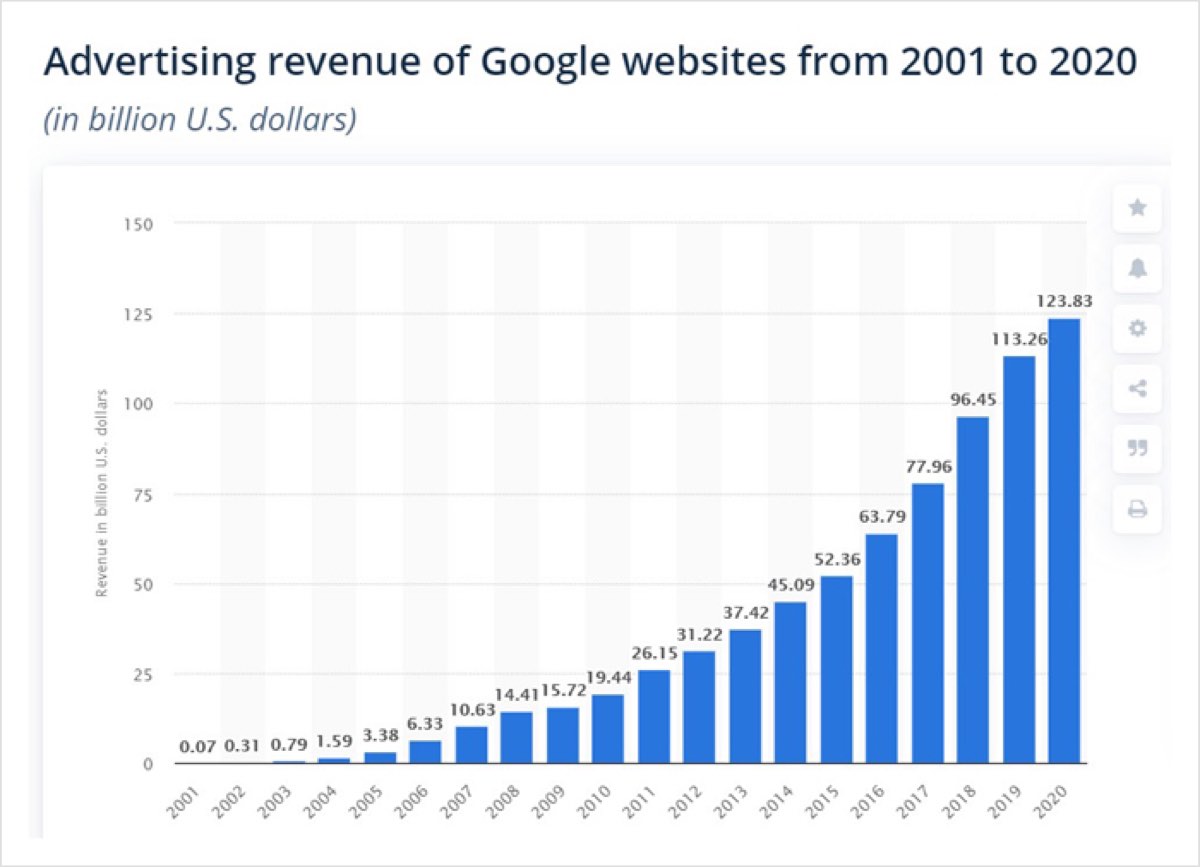
It is best to be on top of all the trending searches and keywords to truly take advantage of this platform. According to reports, the advertising revenue of Google sites amounted to US$123.83 billion in 2020, which highlights its importance and impact on businesses.
A Quick Primer on Google Ad Auctions
We’ll explore all the reasons why it is a good idea to update your google ad campaigns. But here’s the deal: all these reasons are dependent on the way these campaigns work.
Google ads are essentially an auction system, where your ad campaign’s success depends on the quality of your ad and the amount you bid. And this happens every time a user searches for a keyword that you want your ad to be associated with.
The following factors affect the quality score of your ad:
- The relevance of the content of your ad to the search query
- the significance of the search keyword for the rest of your ad group
- the suitability of your Google ad to the landing page it leads to
- the number of clicks it has garnered so far
- overall historical performance of your ad campaign
You can see that your ad’s quality, relevance, and appropriateness play a significant role in getting it a high-quality score. It is essential to achieve this metric because Google or search engines often lowers the cost per click for ad campaigns with a higher quality score and gives them higher-than-usual exposure.
Reasons Why You Should Frequently Update Your Google Ad Campaigns
Before we delve into the factors that affect the frequency with which you should update your campaigns, let’s look at the reasons why you need to do so in the first place.
1. Keeping Up With New Features
In the recent past, Google has made several new feature additions to AdWords and revised its ad platform. This includes new extensions addition or altering the ad format, which helps businesses with their marketing strategies.
Naturally, if you don’t use these while the rest take advantage of them, you are bound to fall behind.
2. Challenging Your Competitors
You might get complacent about your campaign’s success and believe it’s alright to let it run on autopilot, but your competitors think differently. They are always trying out new features, testing their search ads, and expanding their campaign budget. This can give them an edge over you if your campaigns aren’t evolving right alongside theirs.
3. Changing People Search
While previously, people used their laptops and desktops to search for something, they now use their smartphones or Google devices. As a result, their phrases and also the way they search continuously change. If you want to keep up with this progress, it’s essential to update your Google ad campaign regularly.
4. Don’t Let Excess Clicks Ruin Your Budget
Make every click on your ad count towards your overall marketing and lead generation goals. Take a more informed approach to running a campaign so you know that only targeted audiences click on your ad.
It is essential to go over the search terms and find ones that have the potential to trigger the ads you post. Sometimes specific phrases provide barely any value addition to businesses. You can label these as negative so that they don’t appear in the future keywords list.
5. Make Sure You Aren’t Running Expired Promotions
It might be hard to believe, but even huge businesses aren’t immune to such issues. Brands spend tons of money on online promotions, so prospects are informed about them. However, when prospects get the coupon, they find out it has been expired.
For instance, a potential customer could click on a sale ad for your brand but find out it has long ended once it opens up.
6. Improve The Quality Of Your Ads
Clicks on ads don’t necessarily depict a campaign’s success until you get the visitors to take action. It is essential to test your ads to see if they are working effectively or not.
When you improve your google ads ctr (click-through rates), you get more leads and improve your ads’ Quality Score, lowering the cost you entail per click.
Factors Affecting The Frequency Of Google Ad Campaign Update
The frequency with which you update your Google Ad campaigns depends on your budget, industry, goals, and how much performance data you have to work with. Depending on these factors and how long you run your ad campaign, you can update your ad campaign weekly or stretch it out over more time.
A brand-new account needs closer attention than one with months of historical data, but every campaign needs regular check-ins. Google Ads is not something you set up once and forget about, at least not if you want your ad spend to work hard.
A good rule of thumb is to review newer or high-budget campaigns several times a week and do a deeper review at least once a month. That does not mean changing everything constantly. In fact, too many changes can confuse the system, especially if you are using automated bidding or performance max campaigns that rely on machine learning. The goal is to make thoughtful updates based on real numbers, not panic over every small dip.
Here are a few factors that affect the frequency of your Google Ad campaign update.
1. Your Budget
Your budget plays a big role in how often you should review your campaigns. If you are spending $700 a month, a weekly check and monthly optimization may be enough. If you are spending $70,000 a month, you need much tighter campaign management because even a small mistake can burn through serious money.
Watch your ad spend closely. Look at your cost per lead, cost per sale, and overall return. If the numbers start drifting in the wrong direction, do not wait until the end of the month to act. A campaign that wastes $50 a week is annoying. A campaign that wastes $500 a day is a real problem.
2. How Recent The Campaign Is
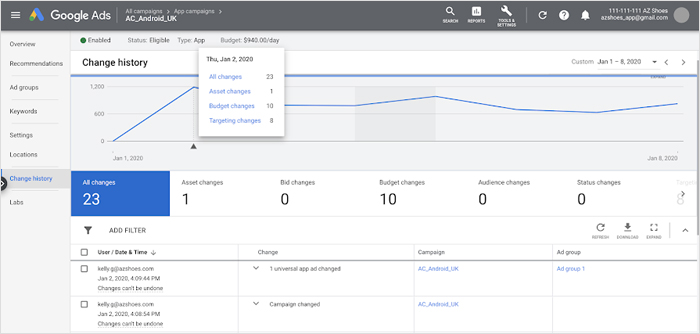
Like any project you start, you need to put in extra effort at the beginning of an ad campaign, as it takes more work to establish it and ensure its success. New campaigns need more attention because Google does not yet have much past data to learn from. You are still testing keywords, ads, audiences, landing pages, and your first bidding strategy.
You get to decide on the target keywords you want to use which have the highest potential to convert. Additionally, you make new ads and update the landing page they are posted on. But even before doing any of that, you need to choose a bidding option for your ads.
Early on, you should review your search terms report often. This report shows the real searches people used before clicking your ads. It is one of the best places to find useful keyword ideas and spot waste. When irrelevant searches appear, add negative keywords right away so you are not paying for clicks that were never likely to convert.
This is especially important in search campaigns, where user intent can vary wildly. Someone searching “emergency plumber near me” is in a very different mindset than someone searching “how to become a plumber.” Both may be related to plumbing, but only one is likely to become a customer today.
Although Google stresses using an automated system, you shouldn’t start out this way because you need data to work effectively. As a beginner, you should start with manual bidding and then move to the automated one.
3. Your Campaign Success
The number of leads you get to your business is an indication of the success of your campaign. If you have many leads, your campaign is already a success, and you don’t have to be highly active.
Having said that, you cannot leave your account, no matter the success rate of your campaign, because more success gives you the opportunity to build on it.
However, if your ad campaign isn’t performing well, you have to get involved in it to work on the issues and bring it to a place where you envision it. Consequently, you need to test your Google ads and keyword choices thoroughly.
In fact, with Google Ads, you can check the optimization scores for your campaign, courtesy of Google. In case you get a low score, you’ll know you have to work on it.
Look at your key metrics: click-through rate, conversion rate, cost per conversion, impression share, and return on ad spend. These numbers help you decide whether to scale, test new ads, adjust your bidding strategy, or improve the landing page.
If performance is weak, you need to dig deeper. Check your conversion tracking first. If tracking is broken or counting the wrong actions, every decision after that becomes shaky. Then review your keywords, ads, ad relevance, and landing page performance. Sometimes the issue is not the keyword. Sometimes the page simply does not match what the ad promised.
4. Number of Targeted Keywords
One of the most significant factors in determining the frequency with which you update your campaign is the number of keywords you target.
When you target many keywords at one time, it generally means you have several ad group and a significant quantity of ads. Additionally, more keywords translate into having more data for review.
This is where campaign structure matters. If your campaign structure is messy, your data becomes harder to understand. Group related keywords together, match ads closely to search intent, and send users to the most relevant landing page. Strong campaign structure improves control, reporting, and ad relevance.
You should also know when to pause keywords. If a keyword has enough clicks and keeps spending without conversions, it may be time to pause it, lower bids, or move it into a different test. Do not let weak keywords quietly drain the budget.
Your Monthly To-Do List For Keeping Your Google Ads Campaign Updated
Here are a few things you need to do with your monthly ad campaign regularly:
1. Adjust Bids
Review your current bidding strategy and ask whether it still fits the campaign goal. Initially, if you decide on manual bidding, you should monitor the positions of your keywords. Google no longer shows the average keyword position but gives the top search. This shows the frequency with which Google ads appear in the top spots over organic listings.
It is essential to be a part of this top ad group, if not the top spot.
Automated bidding can be powerful once you have enough historical data and accurate conversion tracking.
For automated bidding, do not judge performance too quickly. Google’s machine learning needs time and clean data. If your bidding strategy is based on poor tracking or too little conversion volume, performance can become unpredictable.
2. Update Keywords
It is essential to keep an eye out for new keywords that you can test, which is convenient to do so through Google’s plus sign option, which displays a list where you can pick new phrases from.
However, be aware of the fact that using new keywords through this method will get you irrelevant clicks because of the broad match.
This is also when you should add negative keywords. Good negative keywords help protect your budget from searches that do not match your offer. For example, a premium service provider may want to block terms like “free,” “cheap,” or “DIY” if those searches rarely lead to qualified leads.
Over time, a strong list of negative keywords can make your traffic cleaner and your ad spend more efficient.
3. Conversion Data Review
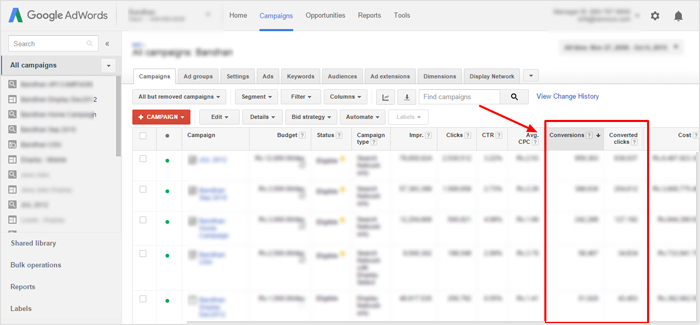
Your ultimate campaign goal is to either create more brand awareness or get new leads. If it is to get more leads, then ensure accurate conversion tracking. You need exact numbers, whether it is in the case of tracking calls or goals.
It is vital to choose the correct conversion attributes to get the type of leads you are looking for. If you don’t get the results you are looking for, it’s time to alter your campaign.
Check your forms, calls, purchases, and imported goals. Then compare Google Ads with Google Analytics to see what users do after they click. Google Analytics can show whether visitors bounce quickly, spend time on the page, or move through the site before converting.
This is also where landing page performance comes in. If your ads get clicks but the page does not convert, the campaign may not be the real problem. The offer, page speed, mobile experience, form length, or message match may need work.
4. Update Ads
No matter how amazing your Average click-through rate (CTR) may seem, it can always be improved. You can have an ad groups consisting of a responsive ad and three expanded text ones.
Every month introduce a new ad and pause the ones that perform the least, which will actually help you beat your best ad, instead of the paused one.
It is always best to pause an ad with at least a hundred impressions. With a high-budget campaign that gets thousands of impressions daily, you can introduce a new ad in every group every few weeks.
Focus on ad relevance. Your ad should match the keyword, the user’s intent, and the landing page. If someone searches for roof repair, do not send them to a general home services page and hope they figure it out. The smoother the path, the better the experience.
For search campaigns, test new ad copy regularly. For performance max campaigns, review your creative assets, audience signals, and asset groups. If certain messages or images perform poorly, replace them with stronger ones.
5. Review Recommendations
Google’s recommendation about your campaign and score provision is an essential feature that you can review. You shouldn’t accept all of them, but it is beneficial to consider any new keywords it gives or features you didn’t know of.
Before applying a recommendation, ask whether it supports your goal. Does it improve your campaign structure? Does it support your current bidding strategy? Does it help your conversion rate? Or does it simply encourage more spending?
Use recommendations as ideas, not instructions.
6. Search Term Review
Your search terms report is one of the most valuable reports in Google Ads. It shows the gap between the keywords you target and the searches you actually paid for. Review your search term report regularly to find any new phrases to use and eliminate one’s that don’t do well.
Add such words as negative keywords to prevent them from recurring. Review this several times a week initially; then, you can space it out over months once you get the wasted spend.
Review it often, especially in newer campaigns. Add useful terms as keywords when they show strong intent. Add irrelevant terms as negative keywords. This one habit can save a surprising amount of money over time.
If you see the same bad searches again and again, add negative keywords at the campaign or account level. If a term keeps spending without results, you may need to pause keywords, tighten match types, or rethink the ad group.
Inactivity Consequences
If you’ve been inactive for a while, Google can take action for you.
New Google ads are usually suggested under recommendations. Depending on your landing page settings, these can be automatically added to your ad campaign. It might seem like a helpful technique, but it is common for these Google ads to be terrible. These Google ads generally use the company name as the first title and don’t fill in the other ad elements.
You might not know this, but Google also tests other recommendations addition, and you can find keywords that you haven’t added to your account.
Automated Campaigns
Even if you choose automated bidding, there’s still a lot that needs to get done. This includes monitoring your search terms, reviewing recommendations, and developing new ads.
Furthermore, it would be best if you kept an eye on your monthly budget and conversion costs. You should get improved results over time; otherwise, you should review your automated bidding settings.
To run an effective marketing campaign, you have to monitor, review, and alter accordingly continuously. This includes simple actions like site audits or bigger ones like ad alterations.
Automated campaigns can save time, but they still need human oversight. This is especially true for performance max campaigns, where Google decides where and how to show your ads across Search, Shopping, Display, YouTube, Gmail, and other placements.
Because these campaigns depend heavily on machine learning, you need to feed them clean signals. That means accurate conversion tracking, strong creative assets, clear audience signals, and enough performance data to guide decisions.
Do not make huge changes every day. At the same time, do not ignore the campaign for months. Review key metrics, budget pacing, asset performance, and landing page performance. If your cost per lead keeps rising or your conversion rate keeps dropping, it is time to investigate.
A smart update schedule looks like this:
Daily or every few days for new or high-spend campaigns:
Check budget, conversions, tracking problems, and major performance swings.
Weekly:
Review the search terms report, add negative keywords, check ad spend, and monitor cost per lead or sale.
Monthly:
Review campaign structure, bidding strategy, conversion tracking, Google Analytics, landing page performance, ad relevance, keyword quality, and overall performance data.
Quarterly:
Use historical data to spot bigger patterns. Look for seasonal changes, budget shifts, audience behavior, and long-term performance trends across your search campaigns and performance max campaigns.
Conclusion
Google Ads is a robust platform that gives businesses a chance to generate more leads, track their ad performance, develop strategies to stand out from their competitors, and eventually boost sales.
However, as straightforward as this approach may seem, you have to be active in how you use it. It is essential to constantly keep an eye on new trends, keywords, and searches and tweak your ad campaigns accordingly, especially if they aren’t running successfully.
You can never be complacent with your advertising techniques, and Improve your Google Ads ctr is one of the best ways to stay above your competition.
The best advertisers do not make changes just to feel busy. They review the account, study the numbers, and make updates that actually support the goal. They improve campaign structure, protect the budget with negative keywords, test ads, check landing page performance, and choose a bidding strategy that matches the amount of data in the account.
A strong campaign gets sharper with time. Better keywords. Cleaner traffic. Stronger ads. More accurate tracking. Less wasted spend. More customers.
That is the real reason to update your Google Ads campaigns regularly. Every dollar should have a job, and your job is to make sure it is doing that job well.